

Mr Nobody Against Putin: Dr Colin Alexander and producer Helle Faber discuss the Oscar-nominated documentary about propaganda that you ought to see
Whenever someone asks me what I do for a living, and I respond telling them that I’m an academic specialising in propaganda studies, the response is almost always the same, “Oh right! That must be really interesting for you at the moment.”
What the ubiquity of the response tells me is that even someone with little academic comprehension of socio-political debates about propaganda or the psychology of mass manipulation is able to articulate that we exist in a deeply concerning time. One where distortion, deceit and falsehood by powerful actors is widespread, and where truth and authenticity has unfortunately become a yearned for premium.
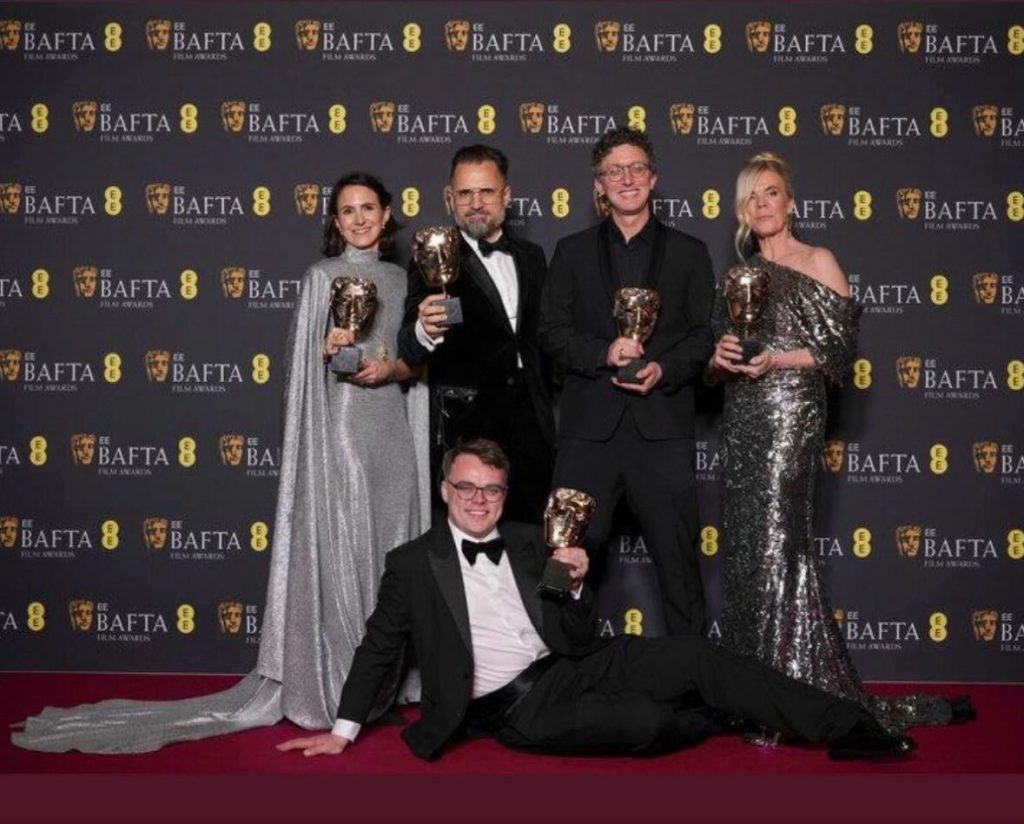
On Sunday 22 February 2026 Mr Nobody Against Putin (dir. David Borenstein) was awarded best documentary at the BAFTAs. I first saw the film at Sheffield DocFest in June last year and wrote a piece in The Conversation the following month about some of the themes in it related to my expertise.
The footage was recorded over two years by Pavel “Pasha” Talankin, an events coordinator and videographer at a high school in Karabash, a heavily polluted town in central southern Russia. He recorded the intensification of Kremlin-directed ultra-nationalist and pro-war propaganda within the Russian schooling system, which has grown since the escalation of the war against Ukraine in February 2022.
Talankin’s footage shows how teachers are now mandated to promote distorted versions of European history. The overly-simplistic narrative that Ukraine has been taken over by neo-Nazis is referred to several times in lessons. Russian flags appear with greater frequency around the school as time goes on, and assembly time becomes an exercise in pledging allegiance to the fatherland. Talankin also documents the general clamp down on dissent and public critique.
Teachers are expected to read from scripts prepared for them by the Ministry of Education. Pupils then respond with choreographed answers – some even glancing down at notes under their desks. The children are told about how dreadful life is in France and the UK because of their reliance on Russian fossil fuels.
Interestingly, the Kremlin has asked that all of this be videoed and uploaded to a central database to ensure compliance with national directives. Indeed, Talankin complains at one point that so much of his time is now spent uploading the videos rather than actually teaching the students and helping them to be creative – as his job previously was.
Talankin takes us on a tour of his city. He shows a pro-war rally that is broadly supported by the townsfolk. Or at least those in opposition dare not say anything or engage in an equivalent demonstration. He takes us to the civic library, theoretically a site of independent learning but which has been hijacked by these propaganda efforts. The narrative emphasises Karabash as a polluted and grim place, much like the political communications environment being experienced by Russians. Talankin is clear and offers this tongue-in-cheek assessment: “This is Russia’s industrial heartland. Life here revolves around the copper smelting plant. In fact, we are world famous because of this plant. People come from all over the world to see the town that UNESCO once called the most toxic place on earth.”
Perhaps the most important moments of the documentary though are the snippets of critique and the sense of “knowing” that Talankin is keen to show. The young girl who jokingly tells her teacher to “blink twice if you’re lying”, and to which all her classmates then laugh. His interactions with other teachers and former pupils who confide in him that they know that the propaganda is questionable, but, likely worried for their status and prosperity, go along with it because the alternative sits in obscurity.
The propaganda is poor though. It is clunky and obvious, and, while it might generate some compliance in the short term, it smacks of both arrogance and desperation on the part of the Kremlin. Indeed, it shows that there is no desire on the part of the Putin administration for Russian people to thrive independently or intellectually.
The most harrowing part of the documentary comes towards the end when Talankin provides an audio recording of the funeral of a young local man who has been killed in Ukraine. He did not film the funeral as this is a cultural faux pas, but the screams and wails of the mother as her son is laid to rest are piercing. The scene seems intended to bring our shared humanity in the barbarity of armed conflict to bare.
The documentary is now also nominated for an Oscar, with the ceremony to be held on Sunday 15 March in Los Angeles.
I approached Helle Faber – the film’s producer and the owner of its production company Made in Copenhagen – about the possibility of her contribution to a piece on the film and the wider issues surrounding propaganda that it covers. We met over Teams on Sunday 8 February. I was at my home in Sheffield and Helle was in Los Angeles where she was attending the pre-Oscars event for nominees and doing some final promotional work for the film. The following is some of the most interesting extracts from our discussion.
CA: Made in Copenhagen documentary productions always tackle interesting or even extreme subjects. What is your process for deciding which projects to take on?
HF: I follow my gut feeling. It’s my first parameter when getting into a film project. My films are always character driven. You need a strong character to be at the front of the documentary and to make it interesting to an audience. We couldn’t have done this film if Pasha wasn’t the character that he is. If someone had approached me and asked if I wanted to do a documentary on indoctrination in Russian schools I’d probably have refused. But Pasha takes the audience on a journey and tells the story in an intriguing and fascinating way. If I find the topic interesting and not overly explored, I believe that other people will find that too. I consider myself to be a pretty ordinary person, which I think is helpful here. I’m not an expert in propaganda so it opened my eyes and hopefully it does for others too.
CA: How did you make contact with the key people behind the film?
HF: I can’t take you into every detail of it because there are security issues around how it ended up on my desk. To this day, I don’t know all the people who helped us out. What I can say is that I knew that this film would have extreme security measures surrounding it. If we were to show this film anywhere in the world we would have to get Pasha out of Russia first. Until the film was finalised, no one was allowed to talk about the project beyond our small group.
The very first piece of footage I saw was [Pavel] Abdulmanov, the history teacher, who’s talking about how the British killed their own people during World War II and how the French are living from oysters and frogs and how the rest of Europe is driving around in horse and carriage. When I saw that my jaw just dropped, and I thought, ‘are you fucking kidding me?’
CA: Propaganda often gets associated (erroneously) as being something that only occurs in authoritarian regimes. However, all governments, corporations, charities and even individuals – especially through social media in the digital age – engage in propaganda. If you look at the UK where I am from, or Denmark where you are from, we have significant amounts of Royalist or monarchical propaganda within the school system. In the UK, history lessons focus on constitutional history. The UK’s history of colonialism is almost completely absent. What are your thoughts on the potential for audiences to watch Mr. Nobody Against Putin from a place of misguided comfort and what has the feedback to the film been? I guess I’m concerned that the audience will think that propaganda is something that happens ‘over there’ in Russia and won’t reflect on the influence of propaganda in their own societies.
HF: Every society and every culture has their own way of developing propaganda aimed at children through school systems etc. Partly this is because we want them to grow up to value the stories, ideas and items that we value. Because we value them. That said, when we started showing the documentary in the US the feedback from so many people was around how it resonated with the US and how children are treated there. For example, how books are being removed from school libraries, or in some states have restricted content around religion, sexual consent, rights, gender etc. And so people have spoken to us after screenings and emphasised the extent to which the content is very similar to the situation in the US, particularly right now. Propaganda about patriotism, the military, that going to war is something natural that should be endorsed. However, perhaps in the UK, Denmark and other parts of Europe there is a danger that people sit back and think it’s scary what’s happening in Russia and I’m so glad it doesn’t happen here.
CA: I found the history teacher, Pavel Abdulmanov, to be the most fascinating character in the documentary. He’s one of the most repressed people I’ve ever seen. How did you find him?
HF: The situation in Russian schools has so many layers of complexity. If you watch the scene with Abdulmanov telling the children the lies about Europe, it’s a comic scene, the audience always laughs. The world is full of black and white situations where the right path is clear. But Abdulmanov is so complex. He can have these opinions but he’s still a nice and gentle guy who the students like despite him filling them up with bullshit. He’s building them up and destroying them simultaneously. He’s the most suppressed person. He’s suppressed by so many things. Particularly, the indoctrination he’s been subject to himself.
CA: Karabash – its grimness and pollution – provides a strong backdrop to the issues inherent in the documentary. It wouldn’t be the same if it was against the backdrop of the grand boulevards or waterfront of St. Petersburg. The physical pollution from the industry of Karabash is commensurate with the cognitive pollution of the propaganda.
HF: You can’t find a more normal place than Karabash. It’s just an average Russian place with average Russians. That’s so important to the authenticity of the project. It’s the lives of ordinary people that are somehow extraordinary because they are being affected by a war that they are far far away from. Beyond this though, if the film had been in somewhere like St. Petersburg, you would have had more critical teachers. There would have been more discussion among the teachers as to how to implement Moscow’s demands. People in the Russian countryside seem to be just so used to following orders, for generations. Karabash is so Soviet and that’s important for the symbolism.
CA: Congratulations on your BAFTA and Oscar nominations. They are well deserved for a fantastic piece of work. I’ve said for a long time that propaganda is the most important issue in the world right now, because it is the issue that entwines all other issues, and it represents the means through which the powerful construct their power. I thought it was interesting that Hollywood: perhaps the largest and most potent propaganda enterprise in the world, wants to honour a film about propaganda. The academic Mathew Alford has discussed the role of the state and formal and financial censorship in the production of films like Top Gun, Argo and many others linked to US foreign policy and security interests. You have produced a wonderful film with very valuable critique of the issues surrounding mass manipulation, but I do wonder if it has gained prominence with Hollywood because it fits with preconceived narratives about Russia threat.
HF: There’s a huge difference between the feature films you mention and the documentary section. I’ve learned so much going through this process. Not least how much money it costs to get shortlisted. And I’m still not sure if it is worth it. We’ll see. Being nominated for an Oscar, you can’t get any more attention than that, because the entire world will know about your title. Seen in that perspective as an advert for this important topic, it’s worth it. But I take your point about Hollywood.
Mr Nobody Against Putin is available on BBC iplayer and selected other streaming services.
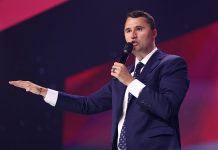
(Featured Image: “Pavel Talankin ArtDocFest Paris 2025-11-17” by Nikita Mouravieff is licensed under CC BY-SA 4.0.)